Saturday, November 7, 2015

Defending The Indefensible - An Incomplete Fragment of an Idea, or, Brief Notes on a Masterpiece:


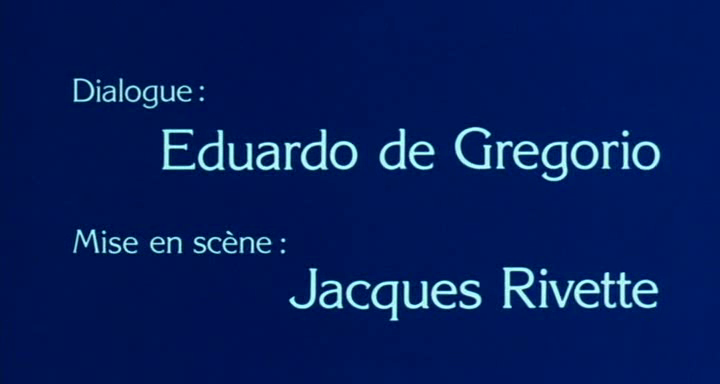
         How does one defend what is, by all reasonable accounts, a terrible film? A film disliked by its own creator; a film that, by any measurable (traditional) assessment of achievement – writing, acting, photography – falls flat at every turn? A film seemingly cast out of its director’s celebrated oeuvre, unavailable on any home video format*, rarely, if ever, broadcast on television, stricken from the history books - with all these strikes against it, why can’t I stop thinking about Howard Hawks’ Red line 7000? 

1. Dave Kehr’s original Chicago Reader capsule review – ‘One of Howard Hawks's last films (1965), this study of perverse and insane ambition on the stock car racing circuit did not do well with the critics of the time, although it has since become something of a cause celebre. The racing footage, strangely, is flat and dull—so bad that some writers claim Hawks didn't direct it. But the dialogue scenes have a primitive emotional force and directness, in spite of (or perhaps, because of) the young, untried cast, which includes James Caan. Depending on your point of view, you'll find it either beautifully pure or sadly unshaded. A puzzlement, but intriguing.’

2. Hawks seems to have accidentally stumbled upon what Bresson strived so hard to achieve – a kind of flatness that connotes real feeling and, both perversely and paradoxically, real depth – truth in the lack of studied affectation. For Hawks, it seems certain that at a different mode of production, a collapsing studio system, a young generation of actors schooled via ‘the method’ or television work, and an increasingly prevalent taste for what might be called psychological realism (perhaps not a precise enough term, but useful if we contrast it against the bold, demonstrative, physical directness of the macho old men in Hollywood’s golden age) all relates to a kind of clash – there’s a similar disconnect between director and acting styles in Fuller’s White Dog, itself a much-maligned late film by a revered old school master (see also Ford’s 7 Women, Hitchcock’s Family Plot, Lang’s 1000 Eyes of Dr. Mabuse, Borzaghe’s China Doll and Preminger’s The Human Factor, among others) . I hesitate to be accused of vulgar auteurism, yet almost every serious cinephile I know is equally fascinated by this flawed masterpiece. In his Senses of Cinema top ten, the great critic Fred Camper lists “any late Hawks film, even ‘Red Line 7000’”, a bold assertion and simultaneously a tacit acknowledgement of its (lack of) stature (he also mentions Ford’s 7 Women, for the record). 

3. While many Hawks films contain a strong female character (but almost always only one), Red Line is the only one I can think of that contains a group of them. Hence, rather than a lone woman looking to gain admittance to the male group (through tenacity, toughness, tests of character, etc.), we have here an entire second group, in contrast to the men. Interestingly, members of both groups contain traditional ‘masculine’ and ‘feminine’ qualities, i.e. some of the women are tough, while some of the men are sensitive.

4. I hasten to attempt some profile of a ‘pure’ spectator, if such a thing is even possible. I can only speak as one well versed in Hawk’s universe, and can’t fathom what someone unfamiliar with the Hawksian oeuvre would make of this odd duck of a film. However, those familiar with Hawk’s obsessions can trace certain fissures, breaks from old habits and expansions into new emotional territory.   

5. from ‘Who the Devils Made It’:

Peter Bogdanovich: Theoretically it’s a good movie. But the only scenes that really played, apart from the race stuff, were the ones between Caan and Marianna Hill.
Howard Hawks: Those two people could act and the others couldn’t. There should have been lots of good scenes… There were a lot of good scenes in the picture and a pretty good story, but you couldn’t follow it. That was my fault – I just messed it up – it’s as simple as that…
PB: There are some avant-garde critics who consider it one of your best films’
HH: Abroad they think it’s great, too – especially in France. I’ve nothing to say.
PB: You just don’t agree.
HH: Oh God, I don’t think it’s any good. And I think it’s all my fault…

6. Purgatory: there is a surprising lack of location variety in the film. By all accounts it was an expensive film, so budgetary restrictions don’t seem to be the case. Instead, there is a sense of a group of people encased in some kind of closed system – the same motel, the same bar, the same track. Almost like ghosts haunting the same spot, cursed.

7. An intriguing paradox: Hawks doesn’t believe in luck, good or bad (re: the famous coin ‘trick’ in Only Angels Have Wings), but he does seem to believe in fate. Regardless, there is always the sense that the true professional has some control over the outcome of an event. Fate is perhaps that one, infinitesimal thing that no one can plan for. A kind of unconscious Hawksian secular religion? You be the judge.  

8. ‘You see this shirt? It’s new. Those shoes? They’re new. No one ever wore them but me. Everything I got is new. Second hand just don’t appeal to me’.  

9. ‘It’s a helluva way to make a living’.  

10. Robin Wood takes one for the team; from his book Personal Views: *incomplete

11. Hawks’ Women, Round 2: *incomplete   

12. Male pathology; Part 8 continued: James Caan would act again for Hawks, in El Dorado. In that film he essentially fulfills the same function as  Ricky Martin in Rio Bravo, that is, the young upstart who both respects and challenges his elders, attempting to prove himself in their eyes. It’s a fine performance in a fine film, but his role in Red Line strikes me as a specific kind of advancement, a kind of tacit acknowledgement on Hawks’ part of his patented macho bravado – an acknowledgement, one must admit, that didn’t progress into later films, presumably due to Red Line’s disappointing box office. Caan’s *** is fearful of not measuring up, a common enough theme in plenty of Hawks’ films, but here extrapolated to its furthest logical extreme as a sexual hang-up – is he/am I good enough?. I could be mistaken, but I can’t recall any Hawks film that deals so frankly, so directly, with this kind of performance anxiety. That Caan becomes a neurotic mess is also atypical of Hawks; rather than suffer silently, or heroically (and symbolically) overcome such limitations, Caan not only attempts to murder his romantic rival, but later admits to it, in a pouring forth of emotion that’s quite unlike anything else in the Hawks oeuvre. A literal expulsion/explosion of a subtext that’s been there all along? I tend to think ‘yes’.

13. James Caan in conversation with Will Harris for The A.V. Club:

WH: El Dorado was actually your second time working with Howard Hawks, right?
JC: Yeah, I was in Red Line 7000. I think I was the only guy who survived that picture. It was terrible. [Laughs.] But he [Hawks] liked me. And, I mean, it was nobody’s fault but his that Red Line 7000 was so silly. Three love stories wrapped around race cars? C’mon.


Friday, February 7, 2014

A Belated Top 20:

I'll eschew the usual finger wagging that I've indulged in in years past. Rest assured, the state of affairs I bemoan here and here are still in place, despite the growth of VOD and various streaming platforms. The old ways are, if not dying, at least changed irrevocably, and sticking to old paradigms seems increasingly fruitless. To put it bluntly, the general public isn't experiencing cinema the way that critics are, at least not when it comes to non-blockbusters, and chaining year-end accolades to product that can afford to play the game does everyone a disservice. Having said that, I think InRO's aggregate year end list is a pretty decent snapshot of the year in cinema, so maybe I shouldn't grumble so much. I contributed capsules for Upstream Color and Drug War, both masterpieces in my humble opinion (and, as of this writing, both streaming on Netflix. No excuse not to watch people).

For what it's worth, here's what I originally submitted to InRO:

Upstream Color
Before Midnight
Drug War
The Act of Killing
Something in the Air (Apres mai)
Faust
Bastards
A Touch of Sin
Neighboring Sounds
12 Years a Slave
Barbara
All is Lost
The World's End
Leviathan
Pain & Gain
The Lords of Salem
Beyond the Hills
The Unspeakable Act
Like Someone in Love
Fast & Furious 6


Both Neighboring Sounds and Barbara got bumped from the list (replaced by Frances Ha and Pacific Rim, if you're interested) although neither played Chicago until well into 2013. I prefer the list as originally submitted.   

Saturday, December 21, 2013

Vampires:

The group blog 'The Vulgar Cinema' has been running a series of entries on John Carpenter and I was delighted to be asked to contribute a piece consisting of virtually anything I wanted. I chose to write a few words on what is, to my mind, the most under-valued of Carpenter's films. 'Vampires' pretty much disappeared immediately upon release, a fate that would also befall 'Ghosts of Mars' (and pity 'The Ward', not even granted a proper theatrical release in the greater Chicago-Land area). My piece is here, and I wholeheartedly endorse the other entries in the series, particularly Sara Freeman's interview with Carpenter's producer (and spouse) Sandy King.    


Friday, October 25, 2013

Escape Plan (2013); Mikael Hafstrom; photographed by Brendan Galvin:


A few words for InRO; I like things about it, but the above image is more visually interesting than anything director Hafstrom can come up with.

Saturday, August 24, 2013

Friday, August 16, 2013

Days of Being Wild; Wong Kar-Wai (1990); photographed by Chris Doyle:


a modest appreciation for InRO's Wong Kar-Wai 'Directrospective' here:

Saturday, July 20, 2013

Escape From New York:


On the eve of a new 2k digital restoration, I talk about Escape From New York for InRO's 'Old Hat' blog. Spoiler alert: It's still awesome.

Friday, May 10, 2013

The Mann Silhouette: 'Ali' (2001), or, Ali as Existential Loner:


                                                            photographed by Emmanuel Lubezki

Wednesday, February 6, 2013

Walter Hill: Back in Action


In honor of Walter Hill's return to the big screen, here's a top 5 for InRO's new 'Old Hat' blog.

Sunday, January 6, 2013

Annual 'Best of' Nonsense Post, circa 2012:

     I’m really trying not to get bent out of shape over the annual best-of ritual in which we are about to indulge; the standard qualification, of course, is a traditional, one-week run in the New York and L.A. markets, which seems simple enough until one encounters something like Haneke’s ‘Amour’ or Bigelow’s ‘Zero Dark Thirty’: neither open in Chicago until later in January, hence I’ve seen neither. In fact, playing the NY/LA game is just another way the studios drum up awards buzz and free publicity, regardless of whether or not something like 95% of the country can see the films in question. The other tack is to simply include anything and everything you saw in a given year – more fruitful, I think, but still open to strange vicissitudes like placing a season of a television show along-side movies, or including older films seen for the first time that calendar year. I guess it’s silly of me to take all of this so seriously, but I do think there’s something amiss in critic’s organizations and magazines putting themselves entirely at the disposal of major studios just to get a taste of their product a little bit sooner.
     With that in mind, I’ve often defaulted to Jonathan Rosenbaum’s criteria when he was still writing for the Chicago Reader: it had to play in Chicago, it had to be a premier (whether old or new, allowing him room to write about Rivette’s ‘Out: 1’, for example), and any average viewer had to be able to conceivably buy a ticket for it; therefore, no advance critic screenings for Cannes releases counted, but public screenings at the Chicago International Film Festival did. Even this can go awry when hard and fast strictures are in place: last year, I was told not to include de Oliveira’s ‘The Strange Case of Angelica’ or Pedro Costa’s ‘Ne change Rien’ on my InRO 2011 list, as both had had nominal, last minute runs in New York at the end of 2010. For whatever reason, I could include ‘Miss Bala’ (hence its absence on this year’s list), even though perusing some already published 2012 best-of lists has more than a few people claiming it counts this year. Weird, right? So here I present two different lists, each in its own way a narrative of what I viewed in 2012, the differences between the two representing the arcane rules and rituals of this peculiar annual game.
    Up first is my InRO ballot (thanks for asking me to play guys), which includes ‘Tabu’. An official 2012 release, yes, but it’s never played in my city (I saw it on a screener, hardly the best way to appreciate Gomes’ stunning mis-en-scene). And while just about everyone would claim ‘A Separation’ as a 2011 premier, we couldn’t see it here in Chicago until the end of January 2012, hence its inclusion on the second list, which is arranged using only my preferred regional criteria.

Here’s my full InRO ballot:
1. The Turin Horse
2. The Master
3. Cosmopolis
4. Tabu
5. This Is Not A Film
6. The Kid With a Bike
7. The Loneliest Planet
8. Holy Motors
9. The Deep Blue Sea
10. Attenberg
11. A Burning Hot Summer
12. Oslo, August 31
13. Bernie
14. Alps
15. The Grey
16. Moonrise Kingdom
17. Kill List
18. Goodbye First Love
19. Prometheus
20. Looper

and here's the aggregate staff list, with capsule reviews. I blurb 'The Turin Horse' and 'The Kid With a Bike', and I must say, despite the inclusion of 'Lincoln', it's a pretty respectable summation of the year in film. 

      The top ten for my preferred version of the list would stay (mostly) the same, although the following ten now makes room for some titles that couldn’t be previously listed, for various reasons:

1. The Turin Horse
2. The Master
3. Cosmopolis
4. A Separation
5. This Is Not A Film
6. The Kid With a Bike
7. The Loneliest Planet
8. Holy Motors
9. The Deep Blue Sea
10. Attenberg
11. Faust
12. Life Without Principle
13. A Burning Hot Summer
14. Oslo, August 31
15. Memories of a Morning
16. Bernie
17. Alps
18. The Grey
19. Moonrise Kingdom
20. Kill List

         'Goodbye First Love', 'Prometheus' and 'Looper' get knocked out of position, but this shouldn’t indicate any lack of enthusiasm for them on my part. I’d also make mention of a triple threat of rock solid action films: 'The Raid', 'Haywire' and 'The Expendables 2'; also worth mentioning are a couple of lovely documentary projects that, outside of festival screenings, were never properly released (both are, to the best of knowledge, extra features on dvd/blu ray releases, although I’m not sure if that was what they were originally conceived for/as: ‘A Letter To Elia’, a heartfelt, deeply personal paean from Martin Scorsese to Elia Kazan, and currently available in a massive box set of Kazan films from Fox. Susan Ray’s ‘Don’t Expect Too Much’ is a loving portrait of her husband Nick Ray, while also documenting the long, laborious production process of his experimental film ‘We Can’t Go Home Again’. Oscilloscope has issued both films together on a beautiful blu ray set, which holds the honor of being my home video release of the year. Absolutely essential stuff here. That’s that: here’s looking forward to 2013.

Saturday, December 22, 2012

Monday, December 17, 2012

I Did Not Care for 'Hitchcock':


This review is also available in a revised and slightly truncated version at InRO. Below is my original version:

There seems to be some sense that critics have responded unfavorably to Sacha Gervasi’s “Hitchcock” because someone has dared assault ‘our’ (that is, critics) sacred cow. There might be some credence to this claim if “Hitchcock” wasn’t simply an average, run-of-the-mill-mediocrity. Indeed, it’s difficult to muster even some incredulousness in the face of such a simple… bore.
Ostensibly detailing the creation of “Psycho”, from initial idea to selling it (or not) to a skeptical studio, from self-financing to marital discord through editing woes all the way to release, and subsequent success, this story would seem the stuff of interesting drama. And yet Gervasi’s endeavor, along with screenwriter John J. McLaughlin, working from Stephen Rebello’s ‘Alfred Hitchcock and the Making of Psycho’, just sits there, devoid of interest. It is certainly some kind of bitter irony that a story detailing one of the great films of all time is itself so monumentally inconsequential. One could ask who exactly this film was made for – those who are familiar with Hitchcock and his work are the most likely to take issue with the film’s many, many liberties, while those with little (or no) knowledge of Hitch, if one could even get them to watch the film in the first place, would be left with little (or no) understanding of what the ‘big deal’ is. Michael Atkinson puts it nicely: ‘The biopic is in many ways a kind of cinema that ferments and thrives on some of its audience's least reasonable instincts. It represents a form of gossip-and-sideshow spectacle that has little, in the end, to do with film, filmmaking, acting or, most of all, narrative. It is no small matter to ask, as movie viewers, why we're watching a particular piece of narrative cinema.’
In what must have seemed on paper as the height of clever self-reference, the film begins with Anthony Hopkins introducing the proceeding movie as if it were an episode of the television program “Alfred Hitchcock Presents”. There’s nothing inherently wrong with breaking the fourth wall, with Hopkins addressing the audience directly and making droll jokes about Ed Gein and his various crimes. I suppose the whole thing is supposed to set a tone, a kind of playful banter, which wouldn’t be entirely inappropriate regarding a showman such as Hitch. Still, the film varies so wildly from scene to scene that one wonders if even the filmmakers knew if they were making a comedy or not. Hopkins talks to an imagined spectre of Gein throughout the film, in what Glenn Kenny has described as ‘serial killer burlesque’; it’s an absurd rhetorical device that serves mainly as a tool for obvious exposition. Later, when Hitchcock falls ill during shooting, the film presents it as some kind of cumulative explosion, the pressure of his life finally convalescing into literal breakdown as spirit-animal-Gein prods Hitch into delirious fits of jealousy. Hitchcock was, in fact, suffering from a simple flu of some sort.
It’s during this flu-episode that Helen Mirren as Alama Reville is, in the context of the film, finally given her day in the sun. Tending to her ill husband, she’s informed that the set is in shambles, that they are hopelessly behind schedule and that further delays are costing the Hitchcock’s reams of money (the fact that they have mortgaged their home to partially self finance “Psycho” is apparently true). Alma marches onto set and immediately wrangles the crew, determined to get some work done. To drive the point home, there’s some business with some extras in the background literally staring at each other slack jawed, apparently besides themselves that this woman could come on set and command it like a general (or – gasp – like Hitchcock himself. Subtext alert). There’s certainly an interesting book to be written about Alama’s contribution to her husband’s work. She has some kind of credit on something like more than 20 of his films, and there’s no doubt that she was a key collaborator. But “Hitchcock” stacks the deck too much in the other direction. There’s no evidence whatsoever that she directed anything during Hitch’s illness, and there is ample evidence that Hitch, once better, simply re-shot most of the footage at a later date anyway. Gervasi does no favors to Alma, feminism, or the historical record by fabricating her contributions to Hitch’s oeuvre while ignoring the very real work she must have done, simply by virtue of that real work being less dramatic. It should also be noted that Hitchcock himself was very effusive and open with praise for his wife. He speaks about her with much regularity in ‘Hitchcock/Truffaut’, at least eleven times by my count, behind only David O. Selznick, Grace Kelly, Cary Grant and James Stewart (and tied with Janet Leigh, for the record).
It’s also distressing to see Gervasi use the famous shower sequence as another facile expression of Hitch’s supposed mental state, as he has Hopkins personally pantomime stabbing Scarlett Johansson’s Janet Leigh over and over again. Bill Krohn supplies evidence that the shower sequence was shot over a period of several days separated by weeks, with and without Leigh, and that various pick-up shots were filmed as Hitch assembled a rough cut and decided what was and wasn’t working. Certainly, Gervasi needn’t show such nitty gritty detail in an admittedly popular entertainment, but further obscuring the facts of the sequence to turn it into a wobbly metaphor for an imagined character flaw is, frankly, beyond the pail.                  
Indeed the film seems determined to linger over every supposed salacious detail, any and all possible deviances Hitchcock purportedly indulged in. Hopkins-as-Hitchcock is constantly leering at blonde women, with other characters occasionally dropping the film-crit term ‘Hitchcock blonde’, as if they were retroactively analyzing him. Character flaws become over-simplified cause-and-effect arm-chair psychology: a hard day at the office and a fight with Alma cuts to Hitch furiously wolfing down can after can of pate. Get it? Because he’s a fat man, as if such an insight adds anything to our collective knowledge of the director or what fueled his work.
I’ve barely mentioned the work of Hopkins, Helen Mirren, Scarlett Johannsen, James D’Arcy and others. Frankly, there’s not much to say, as all indulge in the most simplistic characterizations that likely bare little resemblance to the actual people in question. I’ll reiterate, complete factual fidelity isn’t any kind of pre-requisite towards my liking or disliking a project. But these performances border on the cartoonish. D’Arcy, for instance, does a fantastic impersonation of Norman Bates, but ignores the fact that Anthony Perkins was an actor, a skilled performer. The film “Hitchcock” would have us believe that Perkins was, essentially, Bates, with no differentiation between performer and role. The less said about Ralph Macchio’s brief appearance as screenwriter Joseph Stefano the better.
Ultimately, the truly great directors left us their own autobiographies inscribed in their bodies of work – Nick Ray and his doomed romanticism; John Ford and his contradictory celebration of the individual versus encroaching society; Howard Hawks and his stoic sense of humor, and solidarity, in the face of an uncaring and unflinching universe. We can do much better by Hitchcock then indulging in this awards bait mediocrity – we can revisit, and celebrate, his films. Thankfully, they are sufficiently adequate to survive this momentary blip on the pop culture landscape, a movie as sure to be forgotten as the next Oscar ceremony in which it is sure to be ignored.